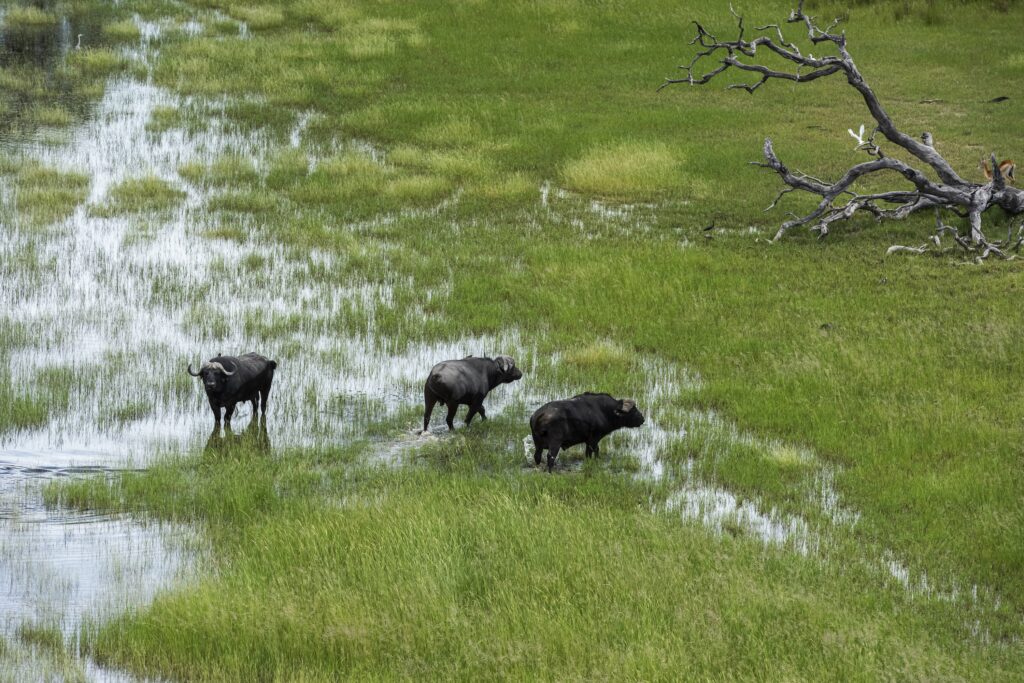
“When the annual flood arrives in the already rain-saturated system of the Okavango Delta, the landscape responds differently than it does during a drier year. Rather than simply filling channels, the water spreads widely across the floodplains and woodland margins. This creates temporary ecological changes that guides can often anticipate, which can produce some truly extraordinary safari moments.
New lagoons, channels and islands form. When soil is already soaked from the rains, water spreads rather than sinks and temporary lagoons form in depressions that normally remain dry. New mokoro channels open through grasslands or palm islands. Large islands appear where slightly elevated termite mounds or tree clusters remain dry.
For mokoro experiences this can be magical, as guests glide through flooded golden grasslands that are usually walking terrain.
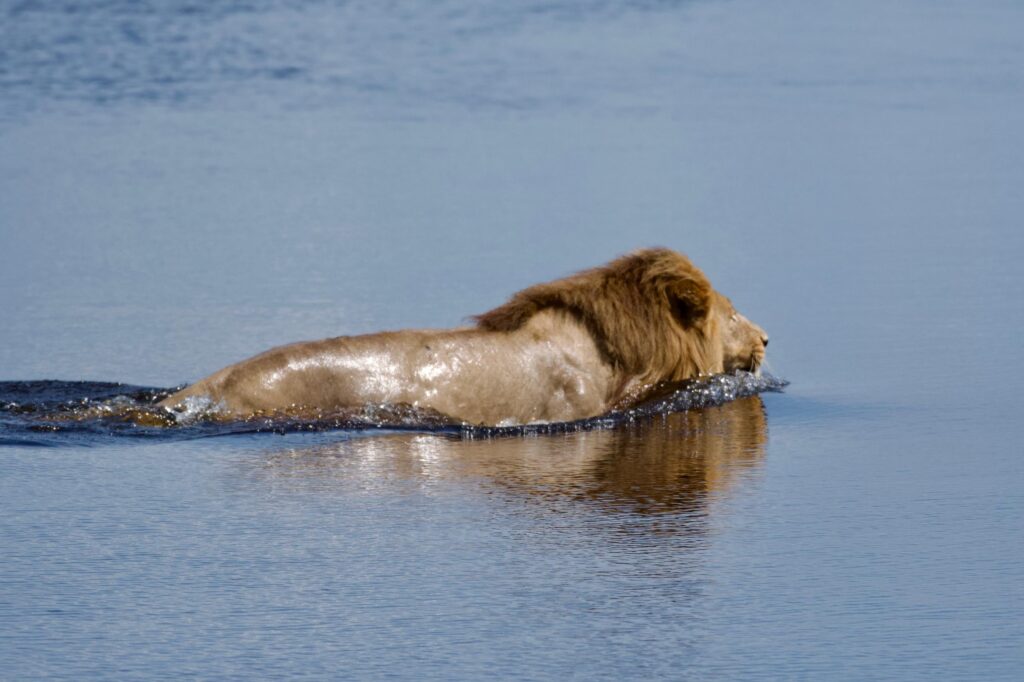
“I believe that every guide sees this as something extraordinary, because we are giving guests an authentic experience of the Delta. Our guiding style shifts as we understand that everything in nature is connected. There is no rush; instead, we trust nature, follow its patterns and interpret the beauty of our area. A great safari is about the experience, not just wildlife sightings.”
Flood expansion dramatically reshapes grazing patterns while attracting many aquatic antelope such as red lechwes, waterbuck and sitatunga. Believe me – these animals will move deeper into flooded areas, where they have an advantage over predators.
Meanwhile, animals that prefer firmer ground – such as zebra, impala, and wildebeest – tend to concentrate on the remaining dry land, making it easy to seek them out – by guides and predators alike. Lions and leopards respond quickly to these landscape changes, frequently patrolling the edges of dry islands where herbivores gather.
Elephants often swim between islands when floodwaters expand, and guests sometimes witness full herds swimming across deep channels.
This can feel like exploring a completely new Delta.”