

Few people understand the Okavango Delta more than National Geographic Explorer Dr Steve Boyes. For more than two decades, he has dedicated his career to researching, mapping and protecting this remarkable wilderness, helping to bring international recognition to its ecological significance.
Here, he reflects on this year’s extraordinary flood, why it matters, and why it is one of the defining moments in the Delta’s recent history. This also marks the beginning of a collaboration with Xigera and our forthcoming Delta’s Ancestral Passage experience.
A Rare Covenant Between Water and Earth
A Reflection by Dr Steve Boyes
The mokoro is the quiet intelligence of the Okavango Delta made visible: a narrow dugout canoe, traditionally carved from a single tree trunk, now made from fibreglass to protect the riverine forests, pushed through shallow water by a standing poler using an “nkashi” – a traditional pole made from silver cluster-leaf – who knows the channels by memory, floodplain, flow, and island. To travel by mokoro is to enter the Delta at its own pace, low to the water, below the horizon of reeds, sedge, and papyrus, reed frogs hiding on grass blades, dragonflies hovering like sparks in the sunlight, and every ripple might be fish, lechwe, hippo, or the wind.
More than transport, a mokoro is a way of seeing and experiencing an ancient, patient relationship between people, water, and floodplain, carrying travellers not across the Okavango, but into own connection to nature.
In the Okavango Delta, the floodwaters don’t arrive with the annual rains, but after them, as a delayed blessing when the rest of the Kalahari is tightening under dust, heat, and thirst.
To witness the flood at Xigera Safari Lodge this year is to stand inside a rare covenant between water and desert. It is to feel the Kalahari softened by a river born in the remote eastern Angolan Highlands in a wilderness called Lisima lya Mwono, the ‘Source of Life’.
“If one were searching for signs of life on Earth from space, the eye would be drawn to the Okavango Delta. It appears like veins spreading across the land, a living system.. And at its very centre lies Xigera, where the essence of the Delta feels most concentrated.”
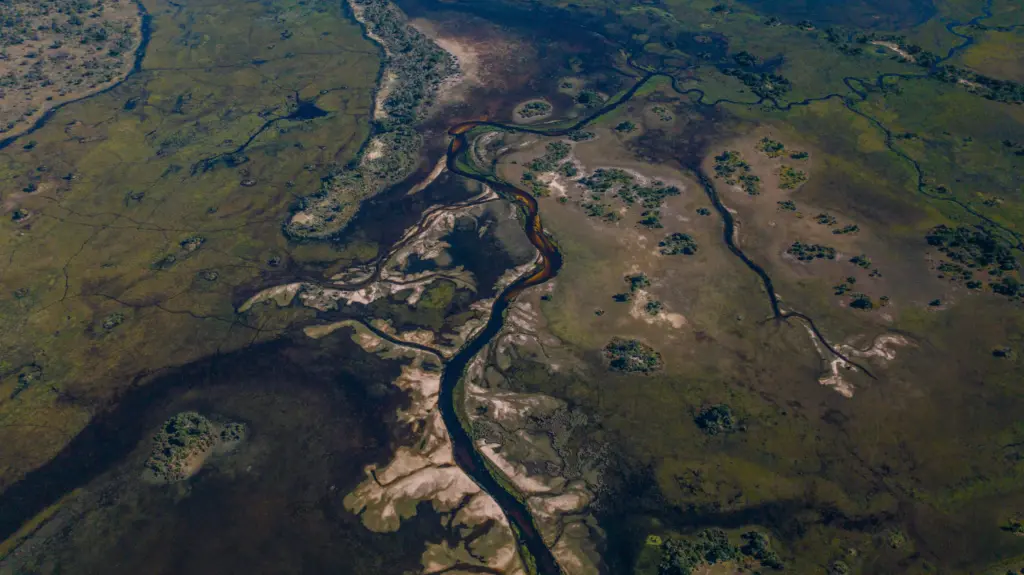
The flood is born in another season, under another sky, into ancient crystal clear source lakes. Witnessing the flood this year is to remember that the Okavango Delta isn’t simply a place of abundance, but a place that teaches abundance as relationship: floodwater becoming grassland, grass becoming lechwe, lechwe becoming lion, flood becoming bird song, silent flow becoming life.
The rainfall this season was prolific with heavy downpours around Xigera, in the heart of the Okavango Delta. This vast wetland wilderness is the Kalahari’s great contradiction: a flood of life held in the heart of thirst. With the floodplains saturated and the early flood pulse inundating the vast alluvial fan, this year’s flood has been one of the most significant on record.
The floodwaters don’t just fill channels, they reconnect them, they blur the boundaries between islands and floodplains, reedbeds and lagoons, path and passage. They change the grammar of movement in the Delta. Elephants cross lagoons where yesterday there was dust, fish enter grasslands to breed, frogs call from places that were silent, birds gather in the abundance of edges, of land and water, and people follow in their mokoros.
This lifegiving flood must, however, also be read in the larger climate story of our time. The El Niño-Southern Oscillation is shifting again, heralding the possibility of severe drought in the Kalahari. This threat reminds us that the Okavango Delta isn’t an isolated miracle. It’s connected to ocean temperatures in the Pacific, to rainfall in the Angolan Highlands, to atmospheric circulation, to decisions made far beyond the reedbeds surrounding Xigera. What appears as beauty is also relationship. The annual flood teaches us this better than any philosophy. Nothing in the Delta exists alone. A channel is also a pathway, a nursery, a border, a mirror, a hiding place, a memory. A floodplain isn’t empty land waiting for water, it’s a living organ, ready to breathe when the river arrives.
At Xigera, the annual flood turns attention outward and inward at once. It asks us to notice the intelligence of timing: the way life has evolved around waiting, arrival, expansion, retreat, and return.
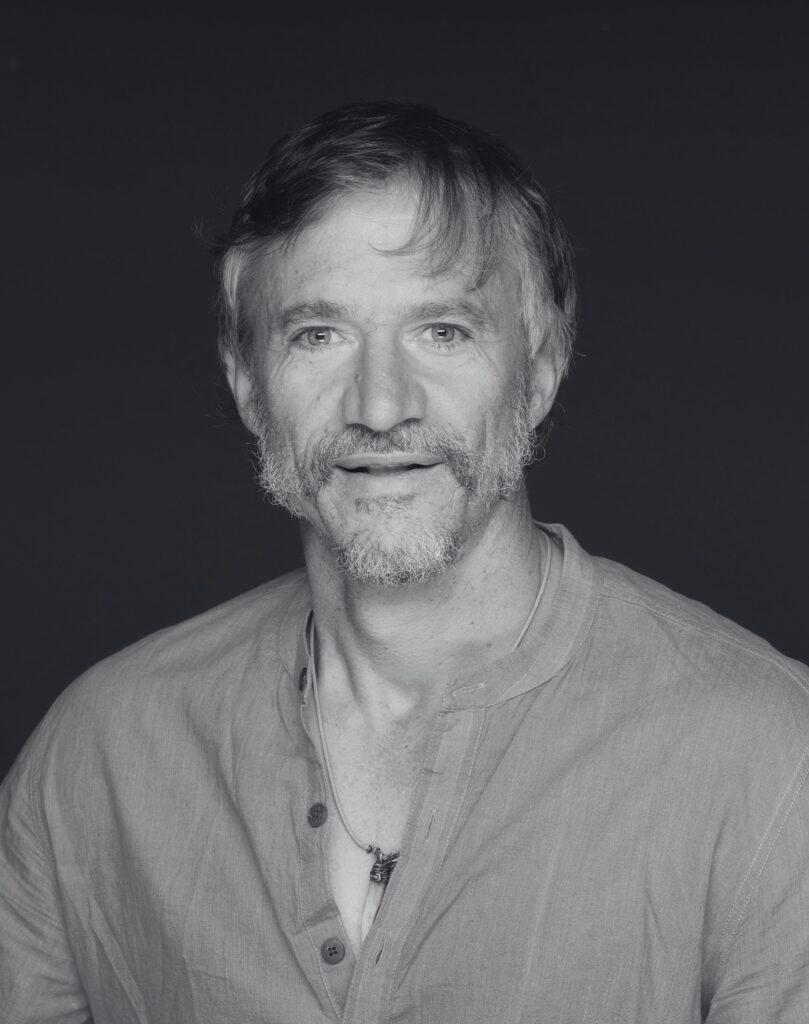
Dr Steve Boyes is an explorer, conservation biologist and National Geographic Explorer with a prolific and unwavering vision for conservation action. To realise that vision, he has founded and leads the Wild Bird Trust in South Africa, the Cape Parrot Project, the National Geographic Okavango Wilderness Project, The Wilderness Project in the United States, Botswana’s Nkashi Trust, the Kavango Wilderness Project in Namibia and Fundação Lisima in Angola.
With more than 27 peer-reviewed scientific publications, Dr Boyes has spent decades exploring the rivers of the African continent, advancing scientific knowledge while championing large-scale conservation initiatives. He has presented seminars at leading academic institutions including the Universities of Oxford and Cambridge, Cornell University, the University of KwaZulu-Natal and the University of California, Berkeley, where he completed his PhD on Meyer’s parrot.
Dr Boyes is both a TED Fellow and a National Geographic Fellow.